
 Phone: 833-528-6612
COMMERCIAL ROOF LEAKS: WHAT PROPERTY MANAGERS SHOULD DO IN THE FIRST 24 HOURS

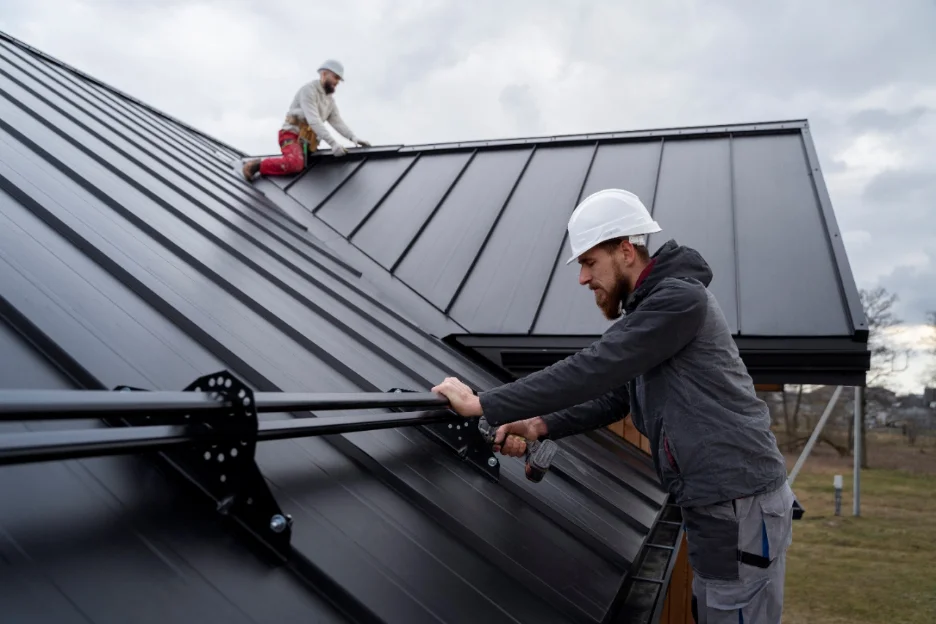
A commercial roof leak is never something to ignore. What may begin as a small drip can quickly lead to water damage, interrupted operations, damaged equipment, and expensive repairs if it is not addressed immediately. The first 24 hours are critical, and having a clear response plan can significantly reduce the impact on your building and your business.
At RoofR360, we provide 24/7 emergency commercial roof repair, professional leak investigations, and advanced infrared moisture scanning for commercial and industrial properties throughout Texas. Whether the leak is caused by severe weather, aging roofing materials, or failing flashings, taking the right steps early can help prevent further damage and simplify the repair process. This guide explains exactly what property managers and building owners should do from the moment a leak is discovered.
Why Immediate Action Matters
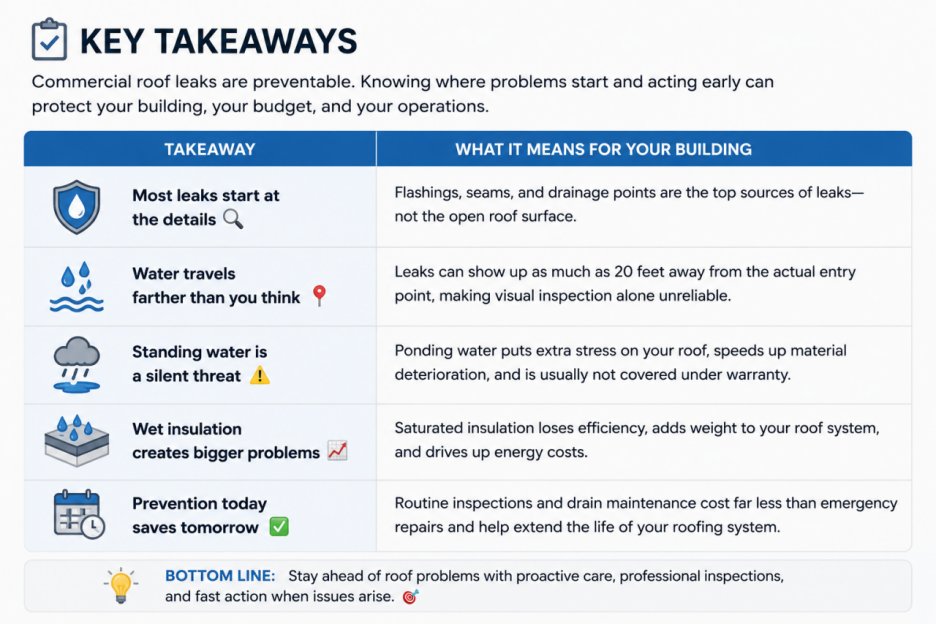
When a commercial roof begins leaking, time is working against you. Water rarely enters directly beneath the visible ceiling stain. Instead, it often travels through insulation, structural components, and concealed spaces before becoming visible indoors. By the time you notice the leak, moisture may already be affecting a much larger area.
Industry studies show that most commercial roof leaks originate around flashings, seams, roof penetrations, or drainage systems rather than the main roofing membrane. Identifying the true source requires professional inspection, making early intervention essential for preventing unnecessary damage and costly repairs.
Severe weather is another growing concern. According to recent reports, the 2026 spring season recorded more than 168 preliminary tornado reports across the United States, highlighting the increasing importance of proactive roof maintenance and rapid emergency response following storms.
The following step-by-step guide will help you protect your property, your occupants, and your investment during those crucial first 24 hours after discovering a roof leak. By acting quickly and following the right procedures, you can minimize water damage, maintain business continuity, and set the stage for faster, more effective repairs.
What Are the Most Common Causes of Commercial Roof Leaks? Most commercial roof leaks do not begin in the middle of the roofing membrane. Instead, they typically develop at vulnerable areas where different roofing components meet or where the roof is penetrated by equipment. Understanding these common failure points allows property managers to identify issues early and avoid costly repairs.
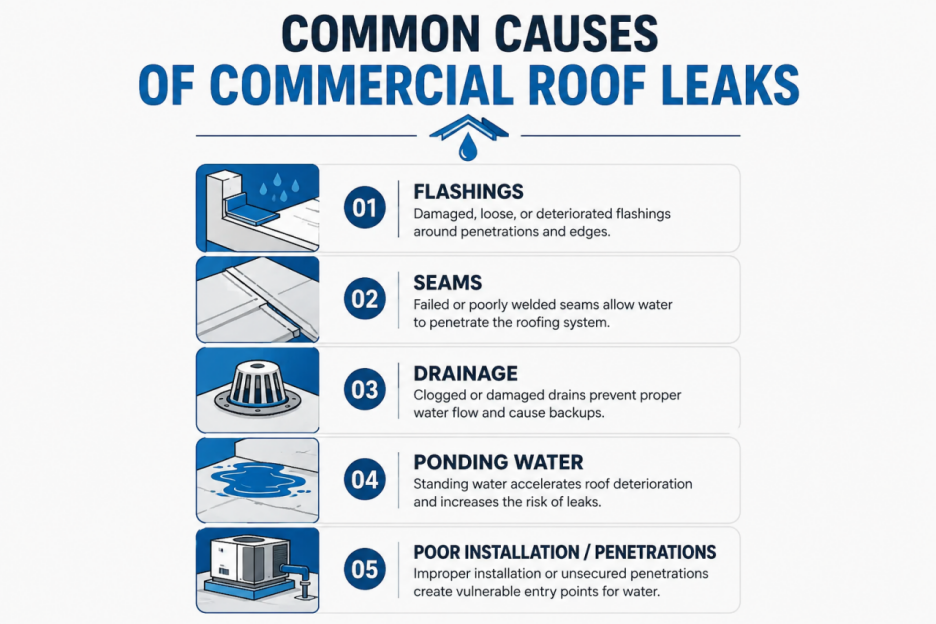
The leading cause of leaks is failing flashings. Flashings are the metal or membrane components installed around walls, skylights, vents, HVAC units, and other roof penetrations to create a watertight seal. Over time, constant expansion and contraction caused by changing temperatures can loosen these seals, allowing water to enter the building.
Seam failures are another frequent culprit, particularly on single-ply roofing systems such as TPO and EPDM. Poor installation, aging materials, UV exposure, and extreme weather can weaken welded or adhered seams, creating openings that allow moisture to penetrate.
Other common causes of commercial roof leaks include:
- Ponding water caused by clogged drains or poor roof drainage.
- Punctures and tears from foot traffic, falling debris, or maintenance work.
- Blocked or damaged roof drains that allow water to accumulate.
- Deteriorated pipe boots and curb flashings around rooftop equipment.
- Membrane blistering or separation caused by trapped moisture beneath the roofing system.
Pro Tip: Schedule a professional roof inspection after every major storm. Flashings, seams, and roof penetrations experience the greatest stress during severe weather and are often the first areas to develop leaks. Identifying and repairing these issues early is significantly more cost-effective than dealing with widespread water damage or structural deterioration later.
What Is Considered a Roofing Emergency? Not every roof problem requires an immediate emergency response, but some situations simply cannot wait. A roofing emergency is any type of roof damage that poses an immediate risk to occupant safety, the structural integrity of the building, or the valuable equipment, inventory, and assets inside. Left unaddressed, these problems can worsen within hours, especially during ongoing rain or severe weather.
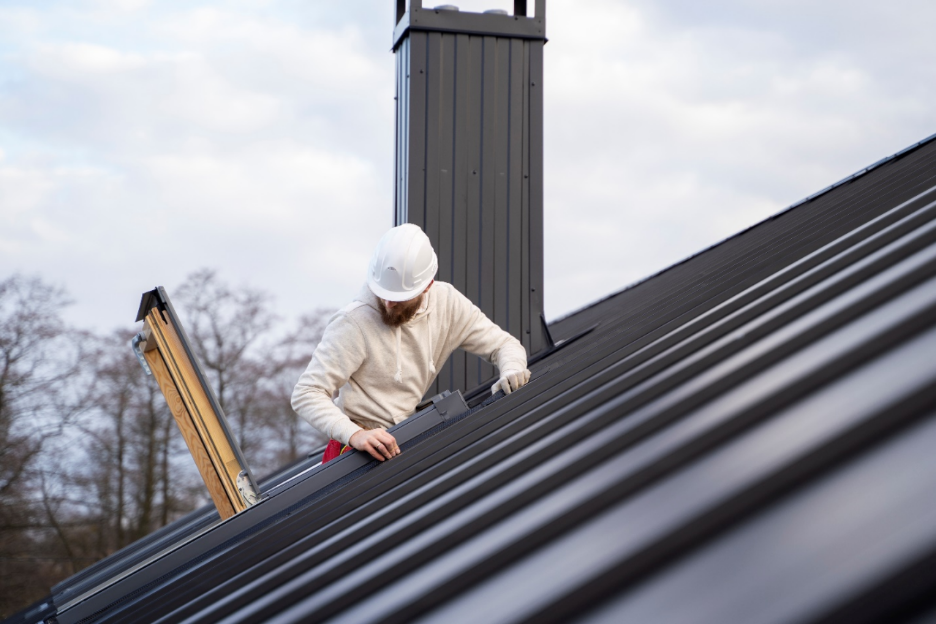
Unlike routine maintenance issues or minor wear and tear, roofing emergencies involve active damage that requires prompt professional attention to prevent further deterioration and costly repairs.
Common examples of a roofing emergency include:
- Active leaks affecting multiple areas of the building.
- Storm, hail, or wind damage that exposes the roofing system.
- Punctures or tears in the roof membrane caused by debris or equipment.
- Fallen trees or large debris penetrating the roof structure.
- Sagging roof sections or signs of structural instability.
- Water entering electrical rooms or coming into contact with electrical equipment.
For commercial properties, these emergencies can interrupt business operations, damage inventory, create slip-and-fall hazards, compromise electrical systems, and encourage mold growth if moisture is left untreated.
Most roofing emergencies are caused by severe storms, aging roofing materials, clogged drainage systems, poor installation, impact from falling debris, or deferred maintenance that allows small issues to develop into major failures. Acting quickly by contacting an experienced commercial roofing contractor can help contain the damage, protect your building, and restore your roof before the problem becomes even more expensive.
Immediate Steps to Take Once You Notice a Commercial Roof Leak: When you discover a commercial roof leak, your first priority should be protecting people and minimizing damage, not attempting repairs. Climbing onto a wet roof or applying temporary patches without the proper training is dangerous and can make the problem worse. It may even void your roofing warranty.
Leave the inspection and repairs to experienced commercial roofing professionals. Instead, follow these important steps while you wait for emergency assistance.
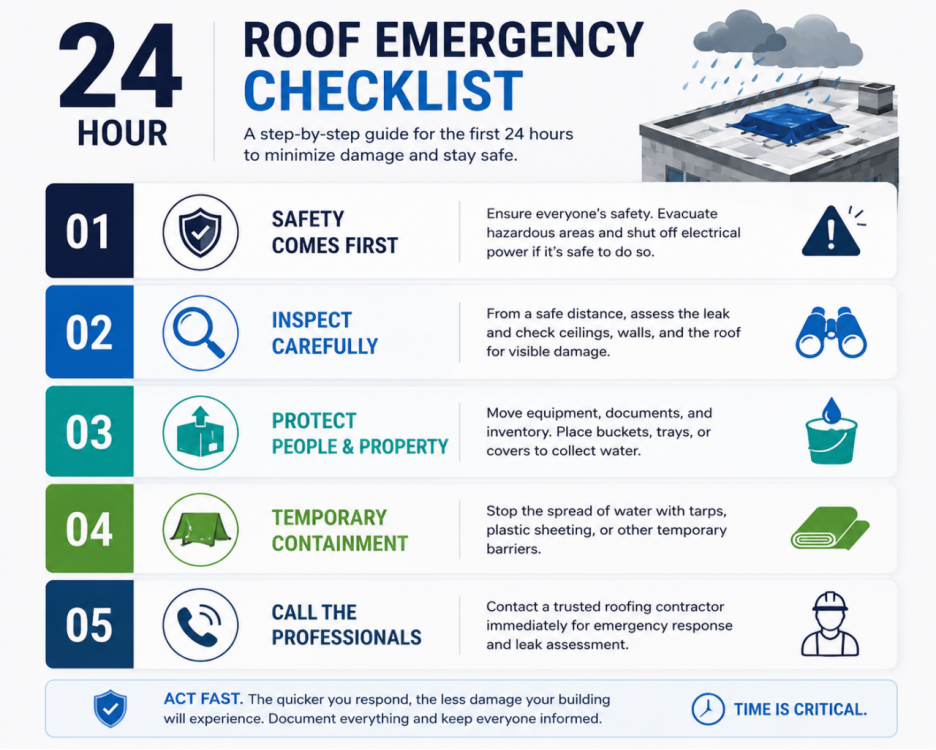
1. Put Safety First
Protect everyone inside the building by securing the affected area as quickly as possible.
- Restrict access using cones, caution tape, or barriers.
- Place wet floor signs to prevent slips and falls.
- If water is near electrical equipment or outlets, isolate the area and shut off power if it can be done safely.
- Stay clear of sagging ceilings or water-filled ceiling tiles, as they may collapse without warning.
2. Limit Interior Damage
Although you cannot stop the leak from inside, you can reduce its overall impact on the building.
- Place buckets or containers beneath active drips.
- Use towels or absorbent materials to prevent water from spreading.
- Cover computers, machinery, inventory, and electrical equipment with plastic sheeting.
- Move valuable items, documents, and electronics away from the affected area whenever possible.
These simple measures can help reduce equipment damage, mold growth, and costly business interruptions.
3. Record What You See
There is no need to determine where the leak originated. Water often travels through insulation and structural components before becoming visible indoors.
Instead, make note of:
- The rooms or areas affected.
- Where water is entering the building.
- Whether the leak is getting worse.
- Signs such as ceiling stains, bubbling paint, wet walls, or pooling water.
This information helps roofing professionals locate the source more efficiently. It also enables them to arrive with the right equipment and materials, reducing investigation time and speeding up the repair process.
4. Contact a Commercial Roofing Contractor Immediately
Time is one of the biggest factors in limiting damage. The sooner a qualified roofing contractor responds, the greater the chance of preventing extensive repairs.
At RoofR360, our emergency commercial roofing team provides:
- 24/7 emergency roof repair throughout Texas.
- Rapid response for commercial and industrial properties.
- Expertise with TPO, EPDM, PVC, modified bitumen, and built-up roofing systems.
- Safe inspections using professional fall-protection equipment.
Our technicians will identify the source of the leak, implement temporary measures to stop further water intrusion, thoroughly assess the roof’s condition, and recommend the most effective long-term repair solution.
5. Document the Damage
Good documentation can simplify both the repair process and your insurance claim. Be sure to capture:
- Photos and videos of all visible water damage.
- Active leaks and affected ceiling areas.
- Damaged equipment, inventory, or furnishings.
- Any operational disruptions or restricted areas.
If conditions change or the leak spreads, continue taking photographs to create a complete record of the damage. A detailed timeline of the leak can be invaluable when assessing the extent of the damage and supporting your insurance claim.
6. Gather Your Roof’s Maintenance History
If available, collect any records related to your roofing system before the contractor arrives.
Helpful documents include:
- Previous inspection reports
- Maintenance records
- Warranty information
- Past repair invoices
- Notes about recurring issues such as ponding water, damaged flashings, clogged drains, or previous leaks
Providing this information allows the roofing team to diagnose the problem more quickly, determine whether the damage is related to age, weather, drainage, or mechanical impact, and develop the most appropriate repair strategy. A faster diagnosis often means less downtime, lower repair costs, and a quicker return to normal business operations.
Don’t Wait Until a Small Leak Becomes a Major Problem
A commercial roof leak can escalate quickly, causing structural damage, business disruption, and costly repairs if left untreated. Acting within the first 24 hours is the best way to protect your building, your occupants, and your investment. By prioritizing safety, containing the damage, documenting the situation, and contacting experienced roofing professionals immediately, you can significantly reduce both downtime and repair costs.
At RoofR360, we understand that roofing emergencies do not follow a schedule. That is why we provide fast, reliable commercial roofing services throughout Texas, including:
- 24/7 emergency roof repair
- Rapid emergency response (our team is dispatched within hours)
- Commercial roof leak investigation
- Infrared moisture scanning
- Preventative roof maintenance programs
Whether you are dealing with an active leak, storm damage, or suspect hidden moisture beneath your roofing system, our experienced team has the expertise and technology to identify the source and deliver lasting solutions, not just temporary fixes.
Do not let a minor roof leak turn into a major business interruption. Contact RoofR360 today to schedule an emergency inspection or request immediate assistance. The sooner we respond, the more damage and expense we can help you avoid.
Frequently Asked Questions:
1. What should I do first if my commercial roof starts leaking?
Your first priority is safety. Secure the affected area, contain the water using buckets or tarps, protect valuable equipment, document the damage with photos, and contact a commercial roofing contractor immediately. Avoid walking on the roof or attempting DIY repairs.
2. What causes most commercial roof leaks?
Most commercial roof leaks occur around flashings, seams, roof penetrations, and drainage systems rather than the main roofing membrane. Aging materials, severe weather, ponding water, clogged drains, and poor installation are among the most common causes.
3. Is a commercial roof leak considered an emergency?
Yes, if the leak is actively allowing water into the building, threatens electrical systems, affects business operations, or weakens the roof’s structural stability, it should be treated as a roofing emergency requiring immediate professional attention.
4. Can a commercial roof be repaired without being replaced?
In many cases, yes. If the damage is localized and the overall roofing system is in good condition, professional repairs such as seam restoration, flashing replacement, or membrane patching can extend the roof’s lifespan without requiring a full replacement.
5. How can I prevent commercial roof leaks? Routine preventative maintenance is the most effective way to reduce the risk of leaks. Schedule professional roof inspections at least twice a year and after major storms to identify and address minor issues before they become costly repairs.